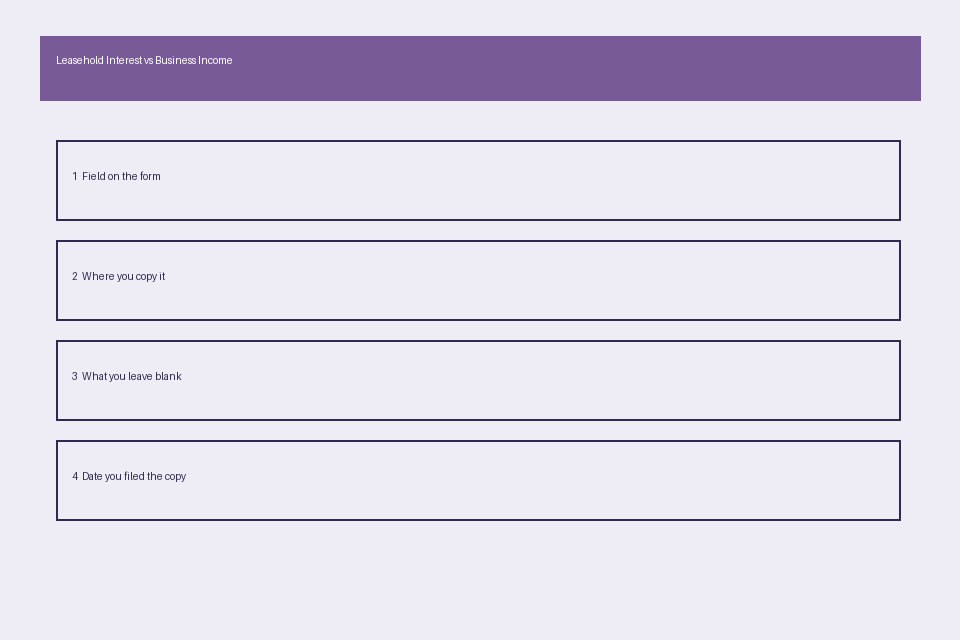
Leasehold Interest vs Business Income

Commercial property insurance adjusters cross-reference two distinct coverage types when processing eligible client property loss claims for rented business spaces. Leasehold interest coverage compensates policyholders for sunk costs tied to non-recoverable lease modifications and pre-paid rental fees if a leased property becomes uninhabitable due to a covered peril, while business income coverage replaces lost net operating revenue and ongoing operating expenses during the period of restoration. Misclassifying expenses between these two coverage buckets can result in delayed claim resolution or reduced eligible settlement amounts, so policyholders should organize all lease documentation, improvement receipts, and pre-loss financial records in their commercial property claim file before submitting a formal request. This guidance is for educational purposes only, and all coverage decisions are determined by your policy issuer and licensed adjuster.
Declarations page line listing covered leasehold improvement thresholds
Your commercial property insurance declarations page includes a specific, labeled line item that sets the maximum eligible payout for leasehold improvements you have made to a rented business space. Eligible improvements are permanent, policyholder-funded modifications that the property owner is not contractually obligated to reimburse you for, including built-in retail fixtures, custom office partitions, upgraded flooring, or specialized wiring for industry-specific equipment that remains attached to the property when your lease terminates. You should flag this line item in your claim folder as a first step, as any expenses submitted above this threshold will not qualify for leasehold interest coverage, even if you have valid receipts for the full cost of modifications. Illustrative example: if your declarations page lists a $75,000 leasehold improvement coverage limit, you can only claim up to that amount for eligible modification costs, even if you spent $102,000 on upgrades over the course of your 10-year lease. This threshold is entirely separate from your business income coverage limit, so you do not need to allocate funds from one coverage bucket to the other if you categorize expenses correctly during the submission process. Make a colored copy of this declarations page line, highlight the threshold amount, and place it in the front tab of your commercial property claim folder for easy reference during adjuster check-ins.

Coverage endorsement box specifying business income loss eligibility windows
Most commercial property policies include a standard or optional business income endorsement with a clearly marked box that outlines the maximum period you can claim lost income after a covered peril, often referred to as the period of restoration. This window typically starts on the date the covered peril occurs and ends when the property can reasonably be restored to pre-loss operating condition, or when the eligibility window expires, whichever timeline is shorter. Many endorsements also include a 72-hour waiting period before business income coverage takes effect, which is noted directly in the same endorsement box section of your policy. You should cross-reference this eligibility window with your existing lease end date, as if your lease is scheduled to terminate before the eligibility window closes, your business income claim may only be valid up to your lease termination date unless you have a signed, written lease renewal agreement on file. This window does not apply to leasehold interest claims, which are evaluated as one-time sunk cost reimbursements rather than ongoing time-based losses. Make a copy of this endorsement page, circle the eligibility window and any waiting period notes, and file it next to your highlighted declarations page in your claim folder.
Claim worksheet column capturing documented monthly rental expense totals
When completing your standard commercial property claim worksheet, you will see a dedicated column for documented monthly rental expenses, which you will use to separate costs eligible for leasehold interest coverage from those eligible for business income coverage. All pre-paid rent, non-refundable security deposits, and lease modification costs are entered in this column for leasehold interest review, while ongoing operating costs and lost revenue are entered in separate business income columns on the same worksheet. You can use the reference table below to correctly categorize common business expenses before submitting your worksheet to your adjuster, to reduce the risk of expense reclassification or requests for additional supporting documentation. Margin Desk’s commercial property claim folder templates include pre-labeled tabs for each expense category to keep your supporting records organized through the review process.
| Expense Category | Eligible for Leasehold Interest Coverage | Eligible for Business Income Coverage | Required Supporting Documentation |
|---|---|---|---|
| Pre-paid 6-month rent for leased retail space | Yes (unused portion only) | No | Copy of signed lease agreement, pre-payment receipt, adjuster confirmation of space uninhabitable status |
| Custom built-in point-of-sale counter installed at policyholder cost | Yes | No | Installation receipts, written confirmation property owner will not reimburse for permanent modifications, photos of damaged counter post-peril |
| Monthly net operating profit lost during temporary store closure | No | Yes | 12 months of pre-loss profit and loss statements, state sales tax filings, pre-loss payroll records |
| Ongoing monthly utility payments for closed store during active restoration | No | Yes | Dated utility bills for the restoration period, written confirmation no business operations were conducted at the space during billing cycles |
| Non-refundable lease security deposit forfeited due to space abandonment after total covered loss | Yes | No | Copy of lease clause stating deposit is non-refundable, adjuster verification of total property loss, written confirmation property owner is retaining the deposit |
Attach a printed copy of this categorized expense list to your submitted worksheet, along with copies of all supporting documents listed in the table, to speed up initial adjuster review. If you are unsure how to categorize a unique expense not listed in the table, consult your insurance broker or licensed claim representative before submitting your worksheet to avoid processing delays.
Adjuster verification note confirming verified leasehold interest valuation
Once your adjuster has completed their initial review of your leasehold interest documentation, they will issue a formal signed verification note that lists the total verified value of your eligible leasehold interest claim, minus any applicable deductibles or amounts above your declared coverage threshold. This note must include specific line items for each approved expense, clear references to the supporting documentation you submitted, and written confirmation that the property owner will not be reimbursing you for any of the listed leasehold improvements or pre-paid rental costs. Keep a signed copy of this verification note in your claim folder, and cross-check the approved amount against your highlighted declarations page coverage threshold to confirm no calculation errors were made during review. If you disagree with the verified valuation, you can submit additional supporting documentation for re-review within the time frame specified in your policy, usually 30 days from the date of the verification note. This note is entirely separate from any business income verification documentation your adjuster will issue, so you will maintain two separate verification documents for each coverage type in your folder once review is complete.
Settlement calculation schedule outlining eligible business income disbursement timelines
After your business income claim is approved, your adjuster will provide a formal settlement calculation schedule that breaks down your total eligible business income payout, minus applicable deductibles and waiting period adjustments, and lists the official timeline for disbursement. Some policies pay out eligible business income benefits as a single lump sum, while others issue monthly disbursements as you submit ongoing expense reports during the active period of restoration. The schedule will also list the official end date of your business income eligibility window, so you can track when you need to submit all final business income expense reports to receive full eligible payment. Cross-reference this schedule with your business operating budget to plan for ongoing expenses during the restoration period, and keep a copy of the schedule in your claim folder next to your highlighted business income endorsement. If you receive disbursements in monthly installments, keep copies of all payment receipts and reconcile them against the schedule each month to ensure you are receiving the full approved amount per the terms of your settlement.
Pull your commercial property policy declarations page and business income endorsement today, highlight the leasehold improvement threshold and business income eligibility window, and file both documents in the front tab of your commercial property claim folder for fast access if you need to file a claim in the future.